
hello world!
- Electrical
- Generators
- Cooling
- Heating
- Coupons
- About
- Blog
- Contact
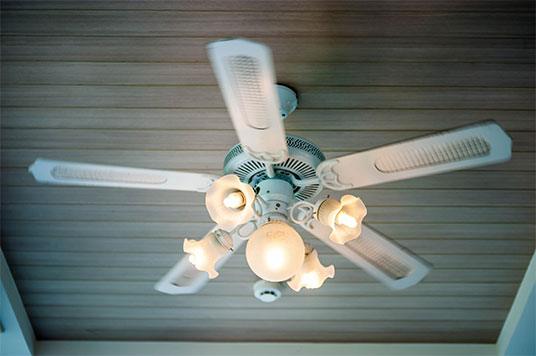
We’ve heard it said - most likely from our friends - that running your ceiling fans will better circulate your AC’s air, resulting in a lower electric bill. We all love hearing ideas that will save us money, right? Unfortunately, this one is commonly misconceived. Here’s the skinny on ceiling fans. While it’s great to feel that cool air circulating on your skin, it’s likely not saving you very much on your energy bill.
Ceiling fans do NOT cool the air; they cool your skin. You see, your air conditioner is designed to move cool air into - and hot air out of - your home to keep you at a comfortable temperature. A ceiling fan itself has no cooling mechanism. It wicks sweat from your skin to cool you down as it blows air on you rather than actually lowering the temperature of the room you're in.
So, what exactly does that mean?
Unless you are physically in the room while the fan is on, it’s not doing any good. If you’re not there to benefit from the ceiling fan’s air circulation, then you’re just using more electricity. If your air conditioner isn’t operating efficiently, then your ceiling fan isn’t doing it any favors.
This is where most people get into financial trouble. They turn on all the ceiling fans thinking that they’ll help the AC work more effectively and lower temperatures throughout their whole home, only to discover even higher bills once all that extra energy use is clocked. Fans have no effect on the efficiency of your AC!
Want to hear the solution to this common problem? It’s simple. If you want to benefit from the energy-saving potential of your ceiling fans without costing yourself more money, then be sure to start by turning fans off whenever the room is empty.
Want to start saving money on your energy bill? Contact the experts at Hoffman Electrical online to discuss which type of high-efficiency unit would be right for you and your home.
Here is another most common way that you’ve unknowingly sabotaged your own money-saving efforts.
Many homeowners don’t realize that they should actually raise their thermostat setting slightly when running their ceiling fans.
With air blowing on your skin from your ceiling fans, you will feel physically cooler at any given temperature than you would at the exact same temperature without the fan blowing. That means, if you want to feel like the room is a comfy 72 degrees, you can - and should - raise the temperature on your thermostat to 77. That 5-degree difference will be virtually unnoticed by you – except when it comes time to pay your energy bill, and then you will see how much you saved by running your AC a little less.
It’s all starting to come together now, isn’t it? You can even start today. Try these two steps to get the most out of your AC and ceiling fan working in tandem:
If you want to learn more about saving on energy costs with a more efficient air conditioner, a better cooling system overall, or if you just want someone to install ceiling fans for you, contact us today!
Ceiling fans can help reduce energy costs when used correctly, but they do not lower the temperature of a room. They make people feel cooler by circulating air, which allows you to raise the thermostat and reduce air conditioner runtime.
Yes. Leaving a ceiling fan on in an empty room wastes electricity because fans cool people, not rooms. Fans should be turned off whenever no one is present.
Ceiling fans use electricity, so running them unnecessarily can increase your electric bill. When used properly with a higher thermostat setting, they can help offset cooling costs instead of increasing them.
Ceiling fans use significantly less electricity than air conditioners. However, fans cannot replace AC on their own. The most cost-effective approach is using ceiling fans while raising your thermostat to reduce AC usage.
Most ceiling fans cost only a few cents per hour to operate, depending on the fan size, speed setting, and local electricity rates. The real savings come from reducing air conditioning use.
Yes. When using ceiling fans, you should raise your thermostat several degrees. The moving air makes the room feel cooler, allowing your AC to run less and lowering overall energy consumption.